
India's first community-sourced culinary dataset for culturally grounded AI.
1.4 billion people. Millions of recipes. Dozens of endangered languages. None of it in your training data, until now.
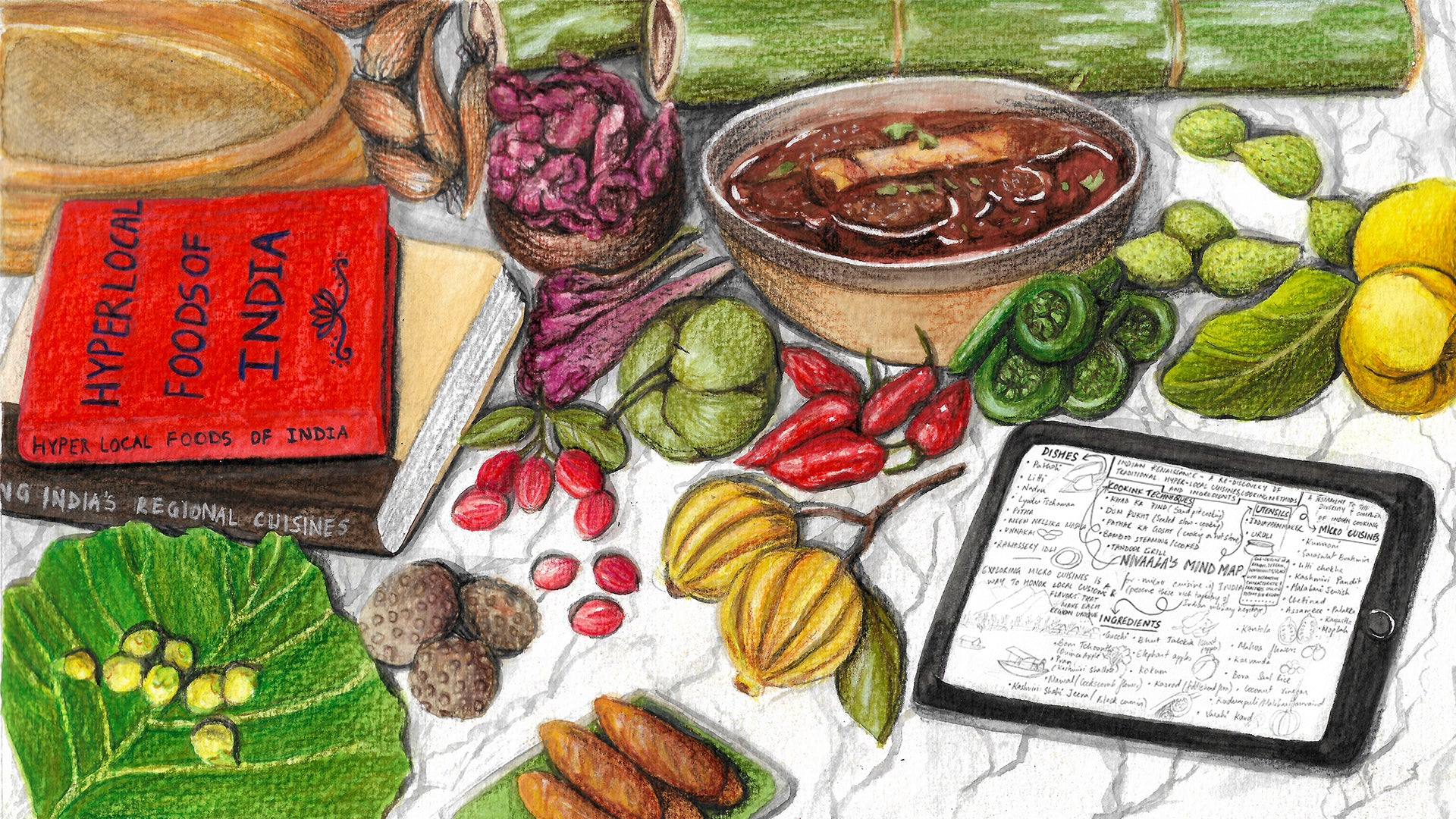
A multimodal dataset built from India's kitchens, in India's languages, by India's communities. Voice, text, photography, and cultural metadata, sourced with consent, compensated fairly, annotated with care.
Fluent. Confident. Wrong.
When an AI model is asked about Sel Maani, it describes a Nepali fried bread. When it translates a Ho recipe for star fruit curry, it produces a dish with bamboo shoots and a chopping board. When it encounters a Santhali ingredient name, it hallucinates mushrooms.
This is not a failure of capability. It is a failure of data. India's culinary knowledge has never been systematically documented for AI training. The result is a model that sounds fluent while producing output that is culturally wrong.
This is not a failure of capability. It is a failure of data. Nivaala is changing that.
| What is Sel Maani? | A Nepali deep-fried bread. |
| Translate this Ho recipe for star fruit curry. | Bamboo shoots, chopping board, gas stove. |
| What is this Santhali ingredient? | Mushrooms. |
| Translate this Bodo silkworm recipe. | Chicken curry with generic spices. |
A multimodal culinary dataset. Sourced directly from Indian communities.
Every entry is community-authored, contributor-attributed, ethically compensated, and culturally annotated. This is not scraped data. This is lived knowledge.
Voice and audio
Native-language recipe narrations across 20+ Indian languages, including endangered and tribal languages. Oral knowledge, preserved as oral knowledge.
Recipes and text
Structured recipes in native scripts with transliterations and English parallels, covering everyday, ceremonial, and seasonal food.
Photography
Ingredients at every stage. Traditional tools and vessels. Finished dishes in their actual serving context, not styled for a Western food magazine.
Cultural metadata
Seasonality, sourcing, ceremonial context, community provenance, generational transmission. The layer that separates data from knowledge.
Ingredient taxonomies
Regional naming variations across languages, scripts, and geographies. The same green may have twelve names. AI needs all twelve.
State-of-the-art models fail on India's culinary knowledge. It's documented.
A 2025 study, ELR-1000, evaluated six leading large language models on translating traditional recipes from ten endangered Eastern Indian languages. Without cultural context, most models produced translations that were largely unusable.
Even with context, models defaulted to Western culinary frames. Chopping boards appeared in kitchens that have never owned one. Silkworm recipes returned dishes with mushrooms and chicken.
The researchers concluded that translation errors in low-resource, culturally specific data are not merely linguistic but epistemic, arising from a lack of cultural grounding in current large language models.
Models frequently function as fluent fabricators rather than faithful translators, underscoring the need for contextual information and human oversight in endangered language NLP efforts.
ELR-1000 Dataset Paper · 2025
We are not a data company that discovered food. We are a food heritage company that understood data.
That distinction shapes everything: how we build community trust, how we design for low digital literacy, how we document knowledge that exists nowhere else.
Gourmand World Cookbook Award
For Memories on a Plate, co-created with The Alipore Post.
Indian languages supported
On Nivaala's voice-first platform, designed specifically for contributors with low digital literacy.
Community participants
Through Cook and Keep: Karnataka Edition at BLR Hubba, over nine days.
NASSCOM NTLF 2026
Keynote on AI, food memory, and the data gap in Indian cultural representation.
Your kitchen holds knowledge the world needs.
Nivaala Culinary AI is built from real kitchens, real ingredients, and real people. If you cook, grow, source, or serve food in India, your knowledge belongs in this dataset.
Home cooks
Share the recipes you learned at home. The ones passed down, adapted, and made your own. Every dish carries a story worth preserving.
Chefs and restaurants
Document the dishes on your menu that are rooted in regional tradition. Help connect professional kitchens to the communities they draw from.
Farmers and growers
Name the ingredients you grow in the languages you know them. Regional crop knowledge is as valuable as the recipes themselves.
Food historians and researchers
Bring your expertise to the dataset. Help annotate, contextualise, and verify entries for accuracy and cultural depth.
Ready to contribute your culinary knowledge?
It takes under ten minutes to get started. Fill in the form and we will be in touch within 48 hours.